What if you need to rest in the middle of a set? Pause, reset your breathing and form, then decide whether you can continue with control. A brief break isn’t a failure; choosing a weight that lets you move well matters more than pushing through sloppy reps. For women who are beginners in strength training in Largo, a simple plan makes that first step feel more manageable.
It’s normal to be unsure which dumbbells to pick, how many reps to aim for, or how long to rest. You don’t need to solve everything at once. Start with a weight you can lift with steady form for 10 to 12 repetitions, and take enough rest between sets to feel ready for the next one.
Here, you’ll learn how to choose beginner weights, set your reps and rest periods, and follow a practical full-body strength plan in Largo. You’ll also see how to adjust the workout as you get more comfortable, so your routine can fit real life and build confidence one session at a time.
Key Takeaways
- Choose a weight you can lift with steady form for 10 to 12 repetitions, then adjust if the set feels too easy or too challenging.
- A trainer can help match exercises and weights to your current ability, then progress the challenge as you grow stronger.
- Plan for controlled sets and enough rest to regain your focus and form before the next round.
- Build a full-body routine around movements for your upper body, lower body, and core.
- Two strength-training days each week can give beginners a practical starting rhythm, with recovery between sessions.
Beginner strength exercises and rep schemes in coached training
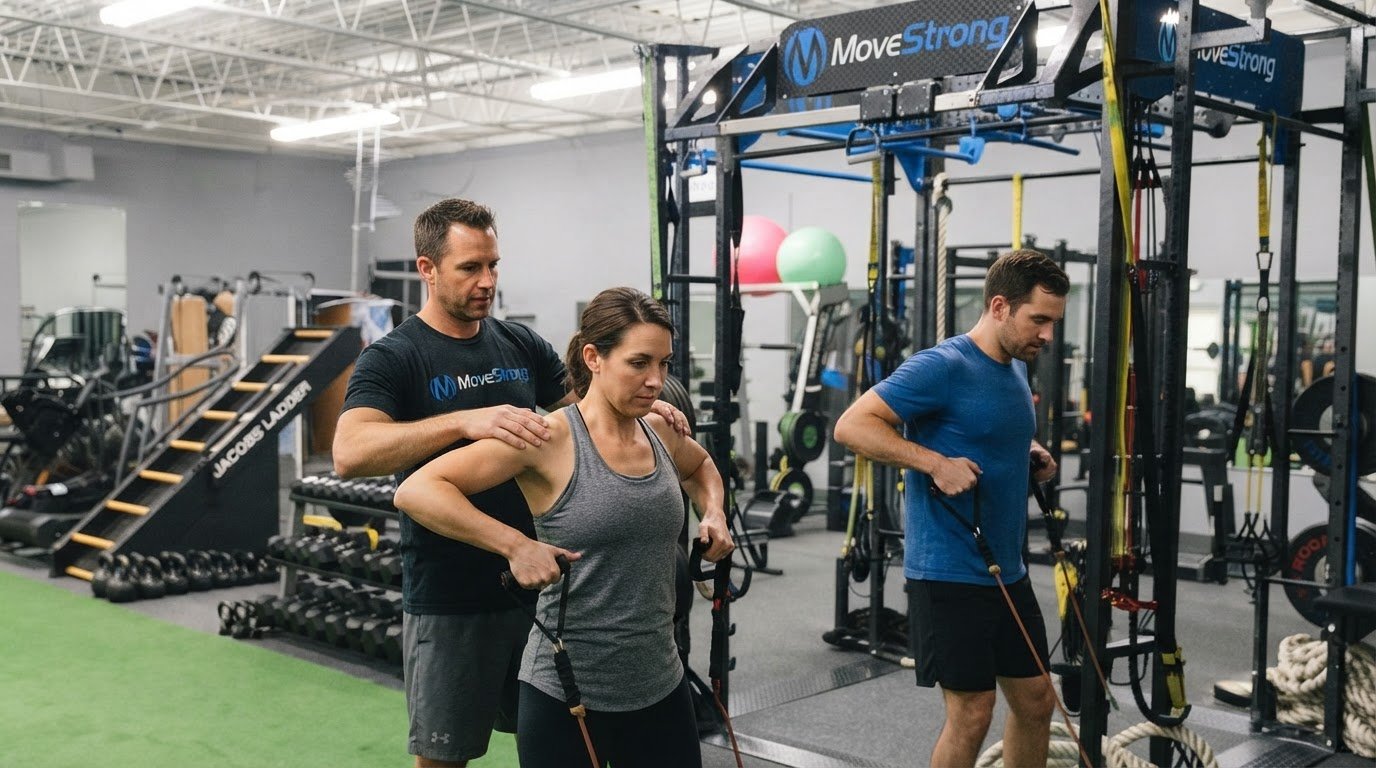
For women beginning strength training in Largo, a coach can help turn basic movements into a balanced workout, matching exercises, weights, and repetitions to your starting point.
-
Choose Lower-Body Dumbbell Exercises With a Trainer
Ask your coach to choose a lower-body dumbbell exercise, such as a goblet squat, based on how you move today. They can demonstrate the setup, watch your squat depth, and check that your feet stay stable as you lower and rise.
A goblet squat can use three sets of 8 to 12 repetitions. Begin with a weight that lets you control every repetition instead of rushing to lift heavier. The trainer can adjust the load or movement if your form changes before the set ends.
-
Add Upper-Body Dumbbell Exercises With a Trainer
Ask the trainer to pair an upper-body push with a pull, such as a dumbbell press and a row. For upper-body exercises, 3-pound dumbbells can be a starting point. Someone already comfortable with weights may begin with 5- or 7-pound dumbbells.
Beginners can start with 10 repetitions for upper-body and core exercises. After a couple of weeks, a plan may increase those exercises to 15 repetitions if your technique remains controlled. Keep the movement smooth; don’t swing the weight to finish a rep.
-
Use Knee-Friendly Modifications With a Trainer
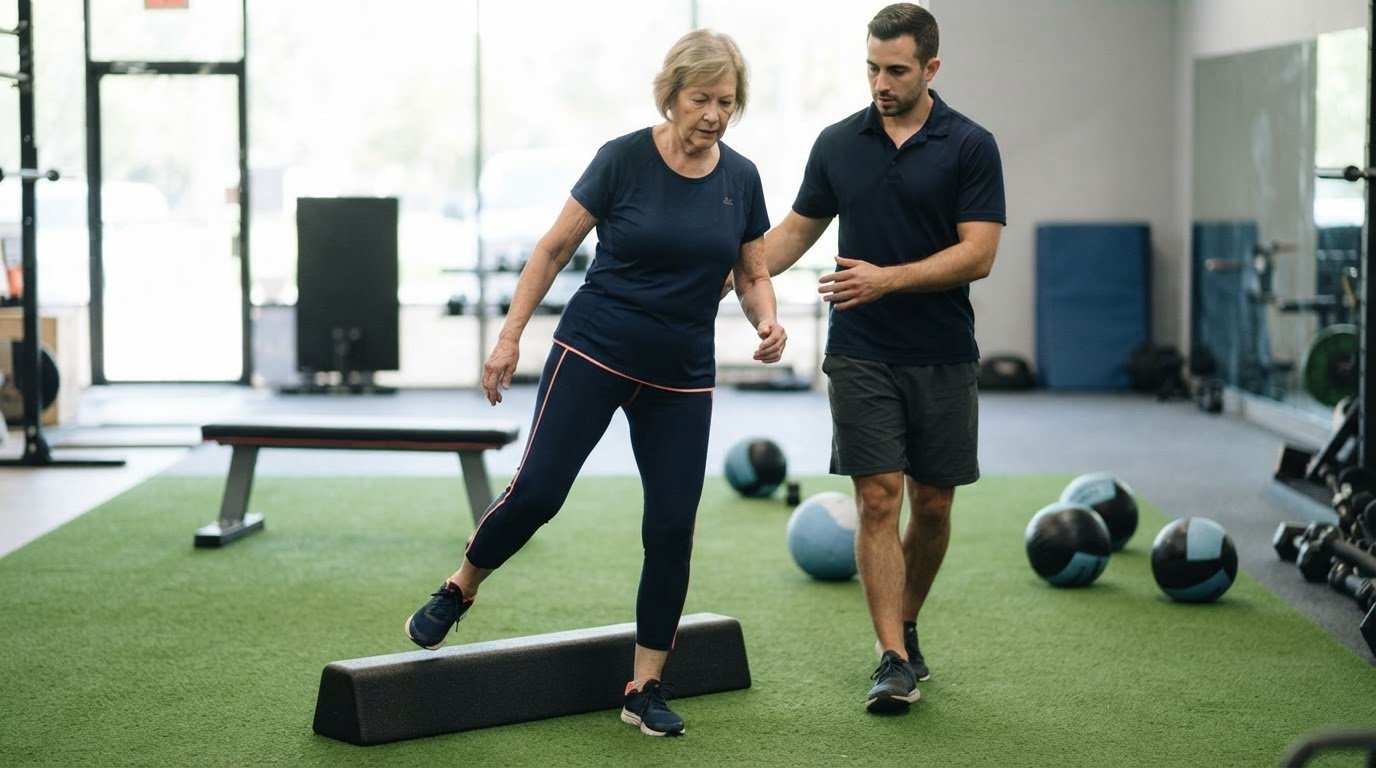
Tell your coach about knee concerns before practicing a squat, lunge, or step-up. They can reduce the range of motion, use a supported variation, or start with bodyweight before adding dumbbells.
For example, use a comfortable squat depth and rise steadily instead of forcing a deeper position. Your coach can watch how your knee moves through each repetition and adjust the exercise if discomfort or reduced control affects your form. For women starting strength training in Largo with knee concerns, coaching can help adapt movements to individual needs.
-
Include Lower-Body Bodyweight Exercises With a Trainer
Ask your coach to include bodyweight movements, such as a glute bridge, sit-to-stand, or supported split squat. These exercises help assess balance and control before adding a dumbbell or making the movement harder.
For a sit-to-stand, your coach can adjust the chair height and guide a controlled stand and return. Keep each repetition deliberate, without using momentum to finish. Once the movement feels steady, progress with a variation or added resistance. A beginner strength-training routine for women in Largo can build from these basic patterns.
How can a trainer help me choose beginner weights?
A trainer can start with a weight you can control for 10 to 12 repetitions, then adjust it based on your form and effort. For example, a beginner plan may use three sets of 8 to 12 goblet squats, while practical starting dumbbell weights for many women are around 4 to 8 kilograms for squats and rows.
- Test the movement before adding load. Your coach can first watch you perform a squat, row, or shoulder raise with a light weight. They’ll check your posture, control, and range of motion, then use those details to choose a suitable starting load. Aim for a challenging set that still looks consistent from the first repetition to the last.
- Match the weight to the exercise. Different movements need different loads. Practical starting dumbbell weights for many women are around 2 to 4 kilograms for raises, compared with 4 to 8 kilograms for squats and rows. These are starting examples, not targets to force. A trainer adjusts for your current ability and whether you can complete the movement smoothly.
- Use effort to guide the set. A plan may aim for perceived exertion at 70 to 80 percent by the final repetitions. In plain terms, the weight should feel demanding near the end, without making you twist, shorten the movement, or rush. If form breaks early, the trainer can reduce the load or change the exercise.
- Build progression one change at a time. Progressive overload means gradually asking your muscles to do more, like adding a small step to a familiar route. Your coach may first help you complete the planned repetitions with steady form. When that feels controlled, the next challenge could be more weight or repetitions, rather than changing everything at once.
- Increase load only when control holds. Progression examples include increasing upper-body exercise weights by 2.5 to 5 pounds, or lower-body weights by 5 to 10 pounds. For a goblet squat, a 2-kilogram increase is one example of a small adjustment. A trainer checks that your glutes and legs do the work without sacrificing balance or movement quality.
- Track what changes between sessions. Note the exercise, weight, repetitions, and how controlled the last repetitions felt. That record helps a trainer spot a pattern: perhaps your rows feel ready for more load, while raises still need the same weight. For the longer journey, explore a coached workout and get guidance as you build strength.
Sets, repetitions, and rest periods
Use the exercise, planned repetitions, and recovery between sets to shape each workout. The examples below show how a coach can organize the work and adjust the pace.
- Follow a clear set-and-rep target. A set is one group of repetitions before you rest. For a goblet squat, use three sets of 8 to 12 repetitions. That range gives you room to practice the movement while keeping the workload easy to track. Finish each repetition with control, rather than rushing toward the next one.
- Match rest to the exercise. A dumbbell floor press plan uses three sets of 8 to 12 repetitions, with 90 seconds of rest. Choose a row variation and repetition target that let you maintain control, with enough rest to repeat the movement well. Rest is part of the plan, not wasted time. It gives you a pause before repeating the movement.
- Use shorter rests for lighter accessory work. Bent-over rear-delt raises can use two sets of 12 to 15 repetitions, with 45 seconds of rest. Bird dogs can use two sets of 8 to 10 repetitions per side, also with 45 seconds of rest. A trainer can adjust your pace if your next set begins before you can maintain the same control.
- Keep paired exercises organized. In a superset or tri-set, complete the planned exercises in sequence, then rest for one minute between rounds. The plan recommends 20 to 30 seconds between exercises within a superset or tri-set. For example, alternate a press and a row, using the short transition to move safely into position.
- Use active rest for gentle movement. On an active-rest day, aim for at least 20 minutes of low-intensity movement. An easy walk is one example. Keep the pace comfortable, so the session feels different from strength work. Recovery days still have a purpose: they give your muscles a break from planned resistance exercises.
- Leave space between strength sessions. A beginner plan can schedule two full-body strength days per week, with a day between sessions. Treat that gap as part of your recovery rhythm. If you need an unplanned pause during a set, stop, regain steady breathing, and resume only when you can maintain the exercise’s form.
- Adjust the plan based on each set. Track the exercise, repetitions, and rest period. If you complete all planned reps with control, keep the same structure for the next session before progressing. If your form changes, reduce the challenge or extend recovery rather than forcing the final repetitions.
A beginner full-body strength-training plan with a personal trainer
Build each workout around lower-body, upper-body, and core movements, then keep the routine simple enough to repeat. A trainer can arrange the exercises and adjust their intensity as your form develops.
- Set the session flow. Start with a trainer-led warm-up, then move through a squat or leg press, an upper-body push, a pull, and a core exercise. This sequence gives each section of your body a clear role. A beginner routine can use 10 repetitions of each exercise for three total rounds, with the trainer checking your movement between rounds.
- Practice a lower-body movement first. A leg press is one option for a full-body plan. One beginner workout prescribes two sets of 12 repetitions. The trainer can cue a controlled press and return, then adjust the range or resistance if your movement becomes rushed. Focus on completing each repetition smoothly, rather than treating the machine as a race.
- Add a push and a pull. Shoulder presses can be programmed for two sets of 10 repetitions. Wide-grip lat pulldowns can use two sets of 10 to 12 repetitions. These exercises train different upper-body actions, like pushing an object away and drawing it toward you. A trainer can set the position and watch each repetition before increasing intensity.
- Include a core movement with control. Add a simple core exercise, such as a bird dog, between larger movements or near the end. Focus on keeping your trunk steady while your arms or legs move. Your coach can shorten the movement if your hips rotate or your back position changes, then build the range as control improves.
- Use the first sessions to learn the routine. A four-week beginner plan can combine walking and strength training over 31 days. During its first two weeks, strength sessions are scheduled to last 36 to 43 minutes. Treat that time as a structure, not a reason to rush. The trainer can reserve time for setup, exercise practice, and rest between sets.
- Track quality, not calories burned. Record the exercise, repetitions, and whether you maintained steady form. Those details help your coach decide what to adjust next session. For example, keep the same leg press setup if your final repetitions remain controlled, then progress only when the movement stays consistent. Strength sessions build a repeatable routine; calorie estimates don’t show whether your technique improved.
- Keep the plan workable in real life. Choose a routine that fits your schedule and leaves time to recover between strength sessions. Your coach can keep the exercise order familiar while adjusting a movement or its intensity as needed. Each workout then has a clear purpose, and your next step is based on how you performed, not guesswork.
How many days per week might a trainer recommend for beginner strength training?
Start with at least two full-body strength-training days each week. Your coach can space sessions around your schedule and recovery, then adjust the weekly rhythm as you build consistency.
- Begin with two strength days. Schedule two full-body workouts each week, leaving a day between them. For example, Monday and Thursday create space between sessions. Each workout can cover lower-body, upper-body, and core movements, helping you practice a balanced routine without crowding strength sessions together.
- Choose repeatable days that fit real life. Pick two days that work around work shifts, school runs, or family commitments. A consistent schedule is easier to keep than a plan built around unpredictable free time. If one session has to move, preserve a recovery day between strength workouts instead of squeezing them together.
- Keep recovery days purposeful. Use the day between strength workouts for rest or comfortable, low-intensity movement. An easy walk can help you stay active without turning every day into another demanding workout. Keep recovery movement light, and save challenging resistance exercises for planned strength sessions.
- Add cardio only if it fits your starting plan. One beginner program includes optional cardio or step sessions lasting 20 to 30 minutes, two or three days a week during its first two weeks. These sessions are optional, not a requirement to complete every available workout. A trainer can help fit them around strength days and recovery.
- Progress only when the routine feels manageable. A structured plan may move to three full-body strength sessions weekly after its first two weeks, if you’re ready. That’s a possible next phase, not a demand to increase frequency on a fixed date. Your coach can consider consistency, exercise control, and recovery before changing the schedule.
- Understand that weekly plans can differ. One beginner schedule uses two strength sessions weekly, while another builds toward three. A separate four-week structure includes two full-body strength sessions during its first two weeks, alongside optional cardio and recovery days. These are different plan designs, not instructions to combine every session into one week.
- Review the schedule with your trainer. Bring your work and family commitments into the planning conversation. A clear weekly calendar shows where strength sessions, optional movement, and rest can fit. Explore a coached training session to discuss a starting schedule that suits your routine.
TrYumph Fitness
TrYumph Fitness can turn the weight, exercise, and scheduling decisions in this guide into a coached routine. If you’re unsure how to start, Personal & Small Group Training offers guidance and community support as you build strength. A coach can help you practice movements, choose an appropriate challenge, and adjust your plan as your confidence grows.
That support can be especially useful when busy workdays or family responsibilities make consistency difficult. You can discuss the routine you want to build and the kind of coaching that fits your goals. Progress starts with a clear next step, not a perfect plan.
Contact TrYumph Fitness to talk about getting started.
Make strength part of your next chapter
Your first workout doesn’t need to be perfect to move you forward. It needs to be a starting point you can return to, even when work or family life gets busy. If you’re a woman beginning strength training in Largo, think of consistency as a rhythm you build, not another demand on your schedule.
Choose a next step that makes the process feel clearer. A coach can help turn your goals into a routine suited to your starting point, then support you as you gain confidence with each movement. TrYumph Fitness also offers KidFit, giving families another way to make fitness part of everyday life.
Ready to take that first step? Explore a training option with TrYumph Fitness and start building a stronger routine, one session at a time.
Frequently Asked Questions
What can a trainer recommend if I need to rest in the middle of a set?
Pause the set, set the weight down safely, and regain your breathing before deciding whether to continue. Tell your coach what changed, such as grip fatigue during a row or loss of balance during a squat. They can check your form and adjust the load, movement, or remaining repetitions. If discomfort, rather than ordinary effort, affects the movement, stop that exercise and let your coach know.
How can a trainer help plan recovery days?
Your coach can plan recovery around work, family commitments, and how demanding each workout feels. For example, after a session that leaves your legs tired, reserve the next day for rest or comfortable everyday movement rather than another hard leg workout. Share schedule changes and how you feel during sessions so your coach can shift training days while keeping your routine on track.
What safe beginner strength-training exercises can a trainer coach women through?
Your coach can guide movements suited to your current ability, including chair-supported sit-to-stands, dumbbell rows, and bird dogs. For each exercise, they can demonstrate the setup, give one clear cue, and watch you practice before increasing difficulty. A supported sit-to-stand, for example, lets you focus on balance and control. Your coach can adjust the movement if you struggle to maintain steady form.
How can a trainer help women build a beginner strength-training routine at home?
Your coach can help shape a home routine around the space and equipment you have, such as a sturdy chair, bodyweight, or dumbbells. Explain when you can train and which movements feel unfamiliar. Your coach can organize exercises into a practical sequence and help you record what you complete. This planning advice doesn’t assume that coaching sessions take place at home.
What beginner strength-training classes and personal trainers are available in Largo, Florida?
TrYumph Fitness offers Personal Training and Small Group Training for people in Largo and nearby Seminole, Clearwater, Pinellas Park, Indian Rocks Beach, and Madeira Beach. The company also offers KidFit. To begin, submit its consultation form; the business states prospective clients will be contacted within two business days. Ask about a training approach that fits your goals, experience, and preferred level of coaching.
What common strength-training mistakes and injury risks can a trainer help beginners avoid?
Your coach can help you avoid rushing repetitions, changing your posture to finish a lift, or adding weight before you control the movement. For example, if your back rounds during a row, they can pause the set and coach a more manageable position. Share discomfort promptly rather than pushing through it. Clear feedback helps your coach modify the exercise and keep technique central.
How can a trainer help beginners progress weights and track strength-training results?
Your coach can use a simple log to track each exercise, the load used, repetitions completed, and notes about form. That record shows whether your movement is becoming more consistent, not just whether the weight changed. If your repetitions feel controlled across sessions, your coach can consider gradual progression. If control slips, they can keep the load steady while you practice.

Article by
Coach Matt O'Brien
Coach Matt O'Brien is the founder of TrYumph Functional Training and TrYumph KidFit, where he has helped thousands of adults, children, and families build stronger, healthier, and happier lives through science-based health coaching, personal training, and small group training since 1998. With more than 25 years of coaching experience and over 25,000 hours working one-on-one and in small-group settings, Matt specializes in helping busy adults improve strength, energy, weight loss, nutrition, and long-term health through practical, sustainable lifestyle change.
Matt is a National Board Certified Health & Wellness Coach (NBC-HWC), Certified Strength and Conditioning Specialist (CSCS), Precision Nutrition Level 1 Coach (PN1), and Master Health Coach. His expertise spans strength training, nutrition coaching, healthy habit formation, performance optimization, and healthy aging, helping clients build resilience and enjoy a higher quality of life for years to come. He is also the author of THE MAGIC PILL and FITNESS FUEL (Cookbook) and is passionate about translating complex health and longevity science into simple, actionable strategies that busy people can apply in everyday life.
Through TrYumph KidFit, Matt is equally committed to improving kids fitness, confidence, athletic development, and lifelong healthy habits by creating fun, encouraging environments where children can thrive physically, mentally, and socially.
Matt's coaching philosophy is built on simple beliefs: movement is medicine, consistency beats perfection, and sustainable habits create extraordinary results. His mission is to help people live longer, healthier, happier lives through coaching, community, and caring.
When he's not coaching at TrYumph, Matt enjoys spending time with his wife and two sons, continuing his education in health and longevity science, and creating educational content that empowers people to take control of their health.